

If you’ve ever spent time in industries like manufacturing, data centers, or food processing, you know that process cooling is non-negotiable 365 days a year. But when the winter wind picks up and temperatures drop below freezing, a common question pops up for facility managers and equipment operators: Can a closed circuit cooler actually work in cold weather? As a supplier of closed circuit cooling equipment, I’ve fielded this question hundreds of times, and the answer isn’t a simple yes or no—it’s a mix of design, maintenance, and proactive planning that makes all the difference. Let’s break down how closed circuit coolers handle cold weather, what pitfalls to watch for, and how we at our company build units that perform reliably even when the mercury dips.
First, let’s quickly recap what a closed circuit cooler is, for anyone new to the space. Unlike an open cooling tower, where process fluid runs directly through water that evaporates to shed heat, a closed circuit cooler uses two separate loops: a closed inner loop that carries hot process water, and an outer loop of ambient air and water that cools the inner loop without mixing fluids. This closed design is a huge benefit for industries where water contamination is a risk, so it’s no surprise that it’s grown in popularity over the last decade. But when temperatures drop below 32°F (0°C), even closed systems face a unique enemy: freezing. Ice can form in the outer piping, the heat exchanger, or the fill media, blocking airflow, damaging components, and halting cooling operations entirely. The good news is that modern closed circuit cooler designs include built-in features to prevent this, and with the right planning, they operate just as efficiently in cold weather as they do in summer.
Let’s start with the biggest challenge in cold weather: freezing protection. The core of a closed circuit cooler’s ability to avoid freezing lies in how it manages its working fluid and heat rejection. Most closed systems use a mix of water and glycol in the outer loop, with glycol ratios tailored to the local climate. For example, a facility in a region that regularly sees temperatures of -20°F (-29°C) would use a higher glycol concentration (around 50/50 mix) than a place that only dips to 25°F (-4°C) in winter. But glycol isn’t the only solution. Many of our closed circuit coolers include passive freeze protection features like low-point drain valves that automatically empty the outer loop if ambient temperatures drop too low, or electric trace heating tapes wrapped around critical piping and heat exchanger surfaces. These trace heaters are thermostatically controlled, so they only activate when temperatures near freezing, saving energy compared to constant heating.
Another key design choice is the type of heat exchanger used in the closed circuit cooler. At our company, we offer a range of closed circuit cooling equipment, and one of our most popular lines for cold climates is the corrosion-resistant cooling tower, which is built with coated or stainless steel heat exchangers that can withstand the temperature swings and moisture buildup that comes with winter operations. Wait, you might be wondering: why is corrosion resistance important in cold weather? When freezing and thawing happen repeatedly, condensation can form inside the unit, and if the heat exchanger isn’t properly protected, rust can develop, leading to leaks and reduced efficiency over time. That’s why investing in a corrosion-resistant cooling tower isn’t just a summer upgrade—it’s a critical part of reliable cold weather performance.
Of course, design features are only half the battle. Proper operation and maintenance play a huge role in keeping a closed circuit cooler running in cold weather. I’ve seen too many facilities install a high-quality unit, skip the winter maintenance, and end up with a frozen pipe in January. Simple steps like checking the fluid levels in both loops, testing the freeze protection fluid concentration every fall, and clearing debris from the unit’s air intake (a common culprit for restricted airflow that makes freezing more likely) can prevent 90% of cold-related issues. We also recommend that operators create a cold weather operation checklist for their teams, outlining steps to take when temperatures drop, like verifying that trace heating is working, adjusting fan speeds to match ambient conditions (running fans at lower speeds in very cold weather reduces excess cooling that can lead to freezing), and monitoring pressure levels in the inner loop for signs of blockages.
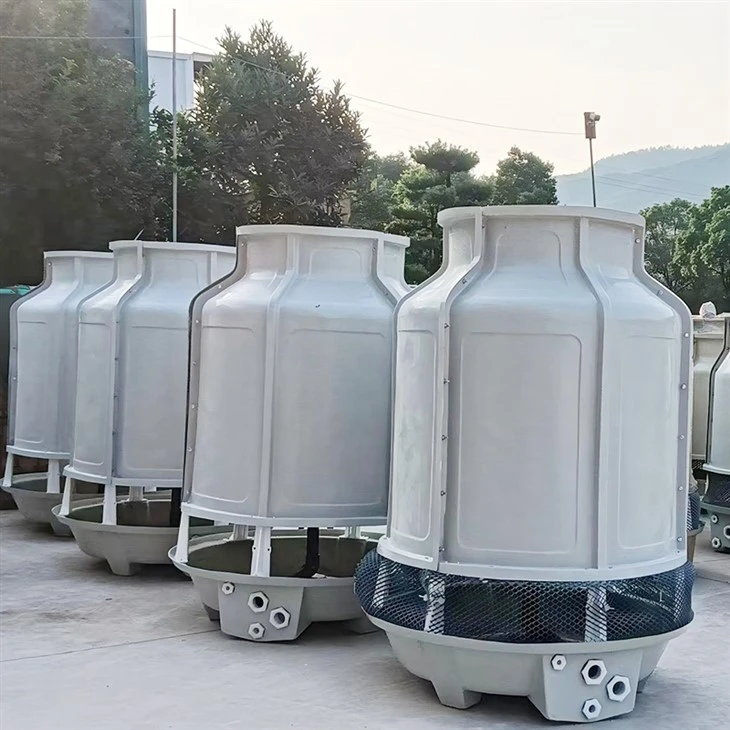

Now, let’s talk about specific types of closed circuit coolers and how they perform in cold weather. Not all closed circuit coolers are the same, and choosing the right type for your climate makes a big difference. For example, our closed cell cooling tower features a dense, closed-cell fill media that improves heat transfer while reducing the amount of water in the outer loop. Less water means less volume that can freeze, which is a big plus in very cold regions. The closed-cell design also helps minimize drift, so there’s less water lost to the atmosphere, which is both environmentally friendly and reduces the need to top up the system in winter when makeup water can be harder to access.
Another consideration is flow configuration. We offer cross flow and counterflow cooling tower designs, and when it comes to cold weather, counterflow units tend to have a slight edge because they have more consistent air and water contact across the heat exchanger, reducing the chance of localized freezing where cold air hits hot spots in the unit. Wait, let me clarify: in a counterflow closed circuit cooler, air flows in the opposite direction of the outer loop water, so the coldest air meets the already cooled water, and the warmest air meets the hottest water. This creates a more uniform temperature profile throughout the heat exchanger, so there are no cold pockets where ice can form. Our cross flow and counterflow cooling tower page has a detailed breakdown of the differences, so if you’re trying to decide which is right for your cold weather application, that’s a great resource to check out.
For facilities that need portability, like construction sites, temporary industrial processes, or emergency cooling needs, our round portable cooling tower is a game-changer for cold weather. These units are compact, easy to transport, and come equipped with integrated freeze protection systems, including built-in drain ports and pre-programmed thermostat controls. We recently worked with a construction company in northern Minnesota that needed temporary cooling for a steel mill expansion last winter. They rented one of our round portable cooling towers, and it operated flawlessly at temperatures as low as -10°F (-23°C), thanks to its compact design that allows for efficient heating and easy draining if needed.
One common misconception I hear is that closed circuit coolers use too much energy in cold weather to be cost-effective. Let’s bust that myth. While it’s true that some units need to run trace heaters, the energy cost is minimal compared to the cost of downtime from a frozen cooling system. For example, a mid-sized industrial facility with a closed circuit cooler that freezes in winter could face tens of thousands of dollars in lost production in just a few days. The energy needed for freeze protection is often less than 5% of the unit’s total annual energy use, so it’s a small investment for reliability.
Another benefit of closed circuit coolers in cold weather is their ability to maintain consistent process temperatures. Open cooling towers can struggle in cold weather because the outside air is so cold that they can overcool the process fluid, leading to issues like condensation in process lines or reduced efficiency in equipment that requires a specific operating temperature. Closed circuit coolers let operators fine-tune the heat transfer process, adjusting fan speeds, water flow, and even glycol concentrations to keep process fluids at the exact temperature they need, no matter how cold it is outside. That’s a huge advantage for industries like food and beverage processing, where precise temperatures are critical for product quality and safety.
Of course, even with all these design features, there are situations where a closed circuit cooler might not be the best option for extremely cold climates. If you’re in a region that regularly sees temperatures below -40°F (-40°C), for example, the amount of glycol needed for freeze protection can be very costly, and even the best trace heating systems might struggle to keep up. But for most industrial, commercial, and municipal applications, closed circuit coolers are more than capable of operating reliably in cold weather, as long as you choose the right unit, maintain it properly, and plan for the seasonal temperature changes.
Let’s take a real-world example from our own customer base. Last year, we worked with a chemical plant in Ontario, Canada, where winter temperatures regularly drop to -15°F (-26°C). They were using an open cooling tower that suffered from multiple freeze-related outages in previous years, leading to lost production and maintenance costs. They upgraded to our closed type cooling tower, which features a fully enclosed design, heavy-duty corrosion protection, and advanced freeze controls. Over the past winter, the unit didn’t have a single freeze-related issue, and their maintenance costs dropped by 40% compared to the open tower. The plant’s operations manager told us that the closed circuit cooler not only performed better in cold weather but also reduced water usage and eliminated the risk of process fluid contamination, which was a secondary benefit they hadn’t even considered.
So, to circle back to the original question: Can a closed circuit cooler operate in cold weather? The answer is a resounding yes—but only if you choose the right design, invest in proper freeze protection features, and follow a consistent maintenance routine. As a supplier of closed circuit cooling equipment, we’ve seen firsthand how well these units perform in cold climates when configured correctly. Whether you’re looking for a permanent closed circuit cooler for a manufacturing facility, a portable unit for temporary operations, or a corrosion-resistant model for harsh environments, our team can help you find the right solution for your specific needs.
If you’re considering upgrading your cooling system for cold weather operations, or if you’re dealing with current freezing issues with your existing equipment, we’d be happy to walk you through our product lines, answer any questions about design and maintenance, and help you find the perfect closed circuit cooler for your facility. Don’t let cold weather disrupt your process cooling—reach out to us to start a conversation about your needs today.
References
- American Society of Heating, Refrigerating and Air-Conditioning Engineers (ASHRAE). 2021. HVAC Applications Handbook: Chapter 44 – Cooling Towers and Evaporative Coolers. Atlanta: ASHRAE.
- Global Cooling, Heating, and Refrigeration Association (GHRA). 2022. Cold Weather Operation of Evaporative Cooling Equipment. Brussels: GHRA Technical Report.
- Miller, J. 2023. “Freeze Protection Strategies for Closed Circuit Coolers in Extreme Climates.” Industrial Cooling Magazine, Vol. 18, No. 2, pp. 32-38.
- National Fire Protection Association (NFPA). 2020. NFPA 70: National Electrical Code (Chapter 4 – Equipment for General Use). Quincy: NFPA.
- Canadian Standards Association (CSA). 2021. CSA B52: Pressure Equipment Code – Part 1: General Requirements for Pressure Equipment. Mississauga: CSA Group.